Your phone rang at 8:40pm.
You didn't answer it.
Somebody else did. That's what this is about — the jobs that slip past you after hours, the leads that go cold over a weekend, the admin eating your Sunday. I set up AI to catch them, prove it works before you pay, and keep it running after.
Most small businesses know they should be using AI. Almost none of them are.
Not because the tools are hard anymore — because nobody has the time to sit down, work out which one matters, wire it into how the business actually runs, and keep it working. It's the same reason people who own a vacuum still pay a cleaner.
It's worth knowing this goes wrong a lot. MIT looked at business AI projects in 2025 and found roughly 95% produced no measurable return. The split wasn't the technology — projects run with outside help succeeded around 67% of the time versus 22% for teams going it alone. Buying the software was never the hard part. Pointing it at the right problem and maintaining it is.
What usually goes wrong
- A tool gets bought, nobody owns it, it quietly stops being used
- It's pointed at something impressive instead of something expensive
- It works in the demo and breaks the first time a real customer is weird
- It drifts — prices change, the answers don't
- Nobody ever measured what it was supposed to fix
Specific jobs, handed over
Not "AI for your business." One concrete thing that's costing you money, automated properly, then the next one once it's paying for itself.
The calls you miss after 5pm
An AI receptionist picks up when you can't, answers what callers actually ask, and books the job straight into your calendar. It doesn't take Sundays off and it never sends a paying customer to voicemail.
Quotes and follow-ups that chase themselves
New lead comes in, gets a reply in under a minute instead of next Tuesday. Estimates go out, reminders go out, nobody falls through a crack because you were on a roof all day.
The same five questions, answered without you
Hours, pricing, service area, "do you take cards," "can you come Thursday." A chat assistant on your site that knows your business handles the repeats and hands you the real ones.
Listings, inventory, and order admin
For online sellers: drafting listings, flagging stock before it runs out, sorting orders, triaging support. This is the lane I know best — it's the day job.
Paperwork that types itself
Invoices, receipts, and forms read and filed into whatever you already use, instead of somebody keying them in by hand on a Friday afternoon.
Review requests, on autopilot
A finished job turns into a review request at the right moment. More reviews is the cheapest local SEO there is, and nobody has to remember to ask.
Selling online instead? Listings, inventory, and order work is my home turf — see the ecommerce side.
I don't just talk about AI. I ship software built with it.
Plenty of people started calling themselves AI consultants this year. Here's what I have actually built and put in front of real users.
 Live Site
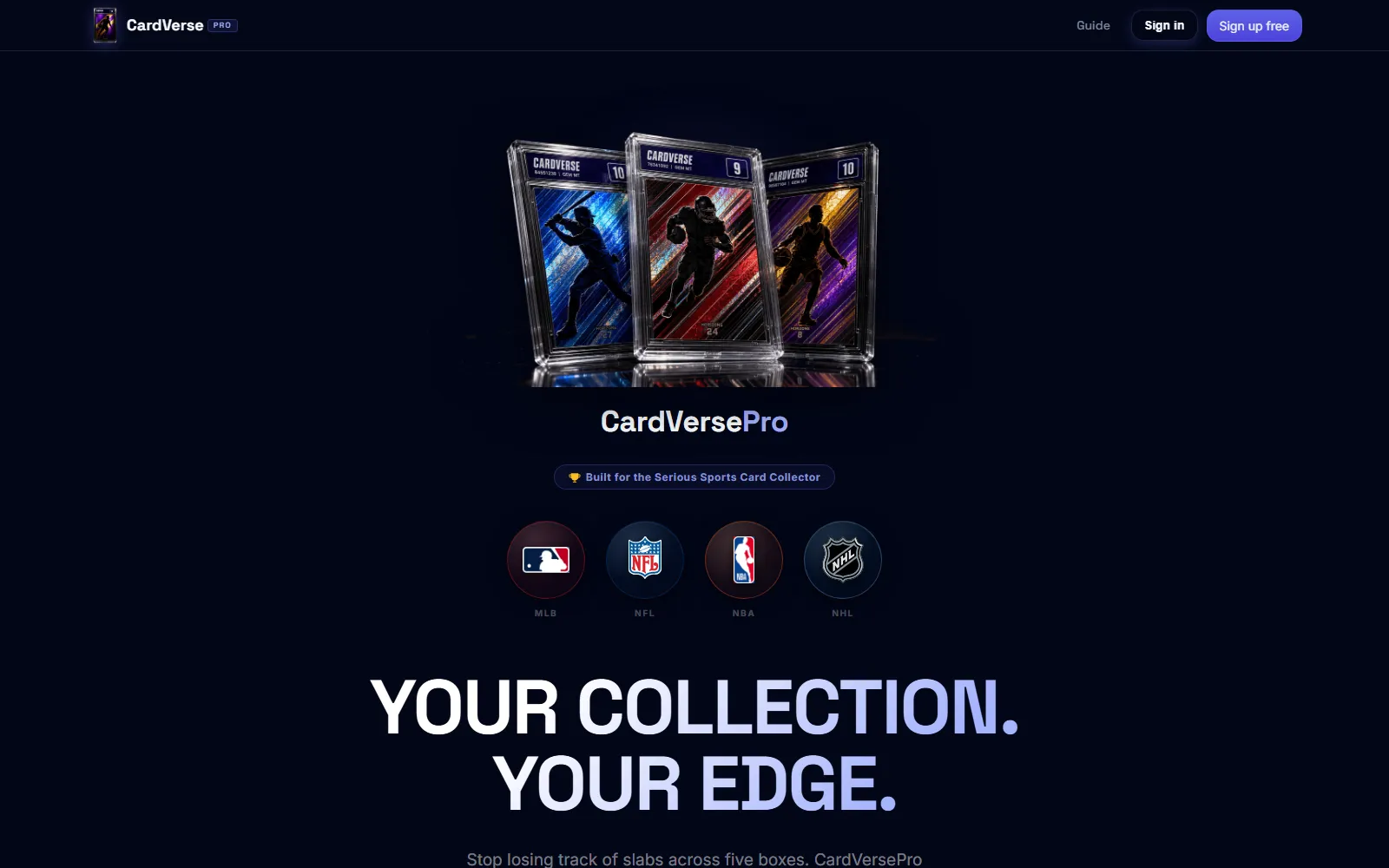
 CardVersePro
A sports card collection platform I built and run — around 83,000 lines of code, live on Stripe billing with free and paid tiers. Go click around it.
The AI inside it: photograph a card and it reads the player, year, set, and card number off the image. Paid members get an AI pre-grade that scores centering, corners, edges, and surface, and estimates what the card would grade. That's computer vision doing a job people pay experts for.
Visit cardversepro.com ↗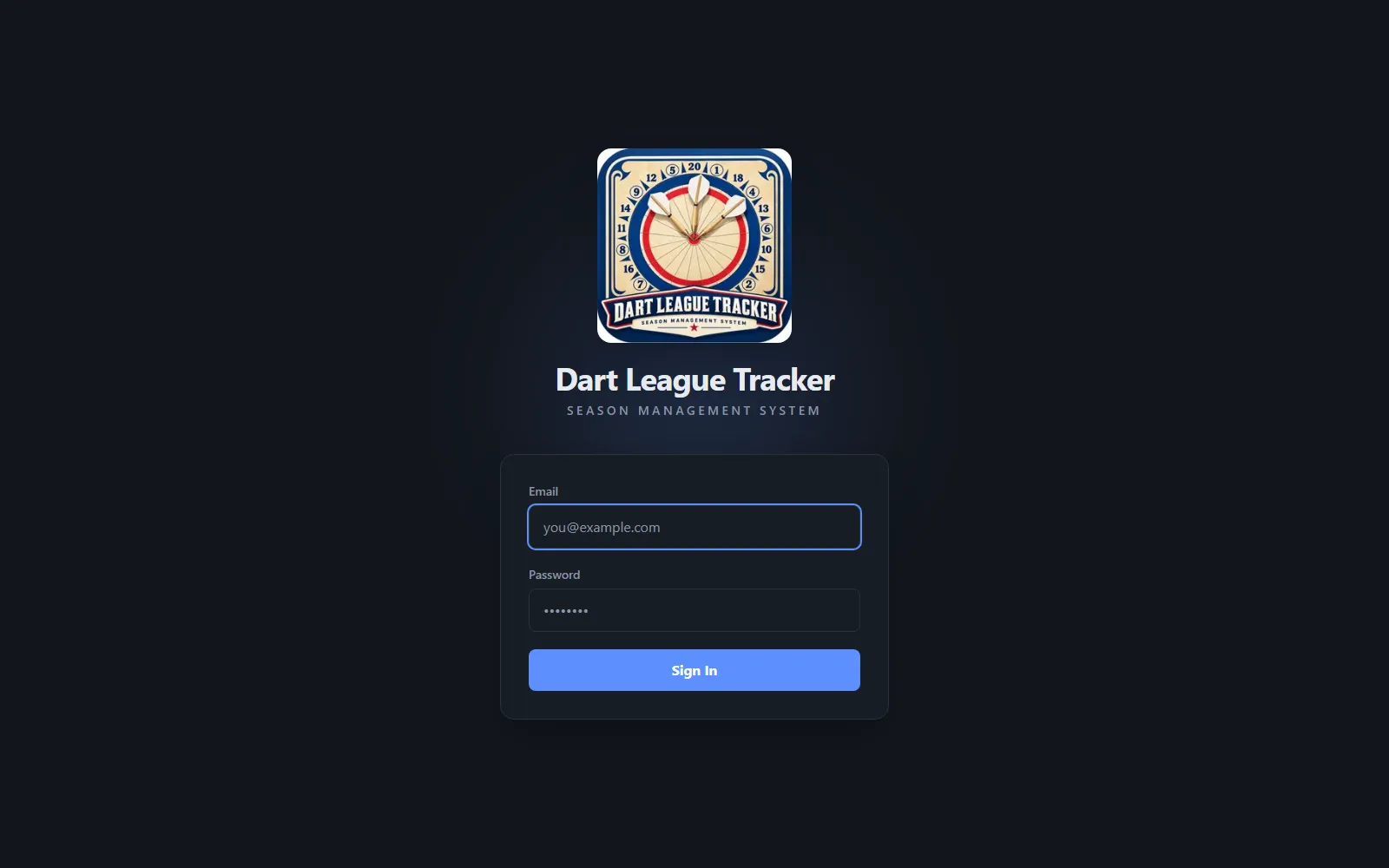 Live App
 Dart League Tracker
Season software running a real bar league: schedules, handicaps, live tablet scoring at the board, standings, payouts, and printed weekly packets with a QR code. It sits behind a login, because it holds a real league's season.
Why it's here: it has no AI in it at all. The scoring math is plain, deterministic code, because that's what the job needed. Knowing when not to reach for AI is most of doing this well — and it carried a complete 12-week season for 6 teams and 24 shooters.
See the live app ↗I've spent eleven years fixing the systems small businesses run on.
Since January 2015 I've been Software Support Manager at SixBit Software, a listing and inventory platform for high-volume online sellers. My days are spent on the unglamorous end of other people's businesses: orders that didn't route, inventory that doesn't match, listings that failed to sync, workflows held together with tape.
That's the part that matters here. The hard bit of AI work isn't the AI — it's knowing how a small business actually operates, which step is really costing money, and what happens downstream when you automate it. I've been doing that for a decade; the AI is just a newer tool for it.
What I won't do
- Promise a revenue number I haven't measured on your business
- Tell you this replaces staff — it replaces busywork
- Set something loose on customers with no human in the loop
- Take on healthcare, legal, or financial work where a wrong answer is a lawsuit
- Build something needing a trained custom model — that needs a team, not me
- Lock you in. Month to month, and you own what I build
You see it working before you pay for it
We talk for twenty minutes
No pitch deck. I ask what eats your week, what you keep dropping, and what a missed job is actually worth to you. Most owners know that number to the dollar.
I build you a working demo — free
Not a slideshow. A real one, set up for your business. If it's a phone agent, you call it yourself at 9pm pretending to be a customer and hear what your callers would hear.
You decide with it in front of you
You've already seen it work by then, so there's nothing to take on faith. If it's not worth the money, you say so and we're done — you're not out a cent.
I put it live and keep it running
Setup, training your staff, and a written handover. Then I watch it monthly: fixing what breaks, tightening what's sloppy, and telling you what it did.
Three numbers, no packages to decode
A working setup for your business, built before any money changes hands. You test it yourself. If it's not worth paying for, that's a fine answer.
One time. A single phone agent sits at the low end; something wired into your calendar, CRM, and invoicing sits at the high end. You get the exact number before I start — no hourly meter.
Twenty percent of the build price, monthly. A $2,000 build is $400 a month for monitoring, fixes, and tweaks. Thirty-day rolling — cancel any time.
Usage is billed at cost. Phone minutes and AI provider fees go straight through at whatever they charge, typically $30–$100 a month for a small setup. I set hard spending caps so nothing runs away.
You own it. Accounts in your name, documentation handed over, no lock-in. Need the website too? That's on services and pricing.
Sayre, PA — and anywhere with a decent video call
I'm in Sayre and happy to sit at your counter: Athens, Towanda, Waverly, Elmira, and around Bradford County. Everything here works remotely too, and a good chunk of my client work always has.
The things people ask first
What does AI automation actually mean for a business like mine?
It means handing the repetitive parts of your week to software that can handle them — answering the phone after hours, replying to leads, chasing invoices, sorting orders. Not robots, not a science project. A few specific jobs, done automatically, that you're currently doing by hand or not doing at all.
How much does this cost?
The demo is free. Putting it live runs $500 to $5,000 one time, depending on how many moving parts it touches — one phone agent sits at the low end, something wired into your CRM, calendar, and invoicing sits at the high end. After that it's 20% of the build price per month to maintain it. A $2,000 build is $400 a month.
Why is the demo free?
Because it's the only honest way to sell this. Everybody has heard AI promises by now. Rather than talk you into it, I'd rather build the thing and let you test it — the tools have gotten good enough that showing you costs me hours, not weeks.
What is the monthly fee actually for?
Watching it, fixing it, and improving it. AI setups drift — a price changes, a service gets added, a provider updates something, and the answers go stale. The monthly covers monitoring, the fixes, small changes as your business shifts, and a plain-English note on what it handled. It's 30-day rolling. Cancel whenever.
Will this replace my employees?
No, and I'd be careful with anyone who says it will. What it replaces is the after-hours voicemail, the lead that sat unanswered for two days, and the data entry nobody wanted. Real decisions stay with your people — everything I build keeps a human in the loop and a record of what it did.
What if it says something wrong to a customer?
That's the right question to ask. I scope these tightly — they answer what they've been given and hand off to you when they're out of their depth, rather than guessing. You get a log of every conversation, and anything sensitive routes to a person by design.
Do I own what you build?
Yes. The accounts are in your name, the configuration is yours, and you get documentation for it. If we part ways, it keeps running and someone else can pick it up. Nothing is held hostage.
Are there other costs on top?
Usually a bit, and I'll tell you before we start. Phone minutes, message credits, or an AI provider's usage fees get billed by them at cost — often $30 to $100 a month for a small setup. I set hard spending caps so it can't surprise you.
What won't you take on?
Anything in healthcare, law, or finance where a wrong answer becomes a liability problem, and anything that needs a custom model trained on your data — that needs a team, not one person. I'll say so and point you elsewhere rather than take the job.
Do I have to be local?
No. I'm in Sayre and I like working with businesses around Athens, Towanda, Waverly, and Elmira where I can show up in person. Everything here also works fine over a video call, and plenty of my work is remote.
Tell me what's eating your week.
Twenty minutes, no pitch. If there's something worth automating, I'll build you the demo.